
Programme 1st year - 1st semester
- Written by Super User
- Published in Programme
- Read 5829 times
- font size decrease font size increase font size
Each month is dedicated to the study of one theme or artist : « the Stanislavski’s system », « Kantor : the bio and the over object », « Witkiewicz : the pure form », « Gombrowicz : from the grotesque to the derision ». Every master class leads to the creation of a 20-minute show played in front of the public during.
The last month will be devoted to Bertold Brecht, through an immersion in the creation process of « La noce chez les fous » by Elizabeth Czerczuk, inspired by the work of Bertold Brecht. The performance will be played as from the 31st December.
THE STANISLAVSKI’S SYSTEM
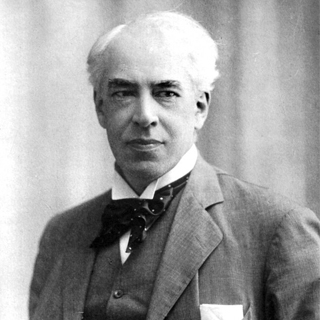
According to this director, the problem at the heart of theatre is this one: how to play on tune and truthfully. Stanislavski offers an acute and sensitive play, which is an exception during his time. Nowadays, the « Stanislavski’s system », stays a reference for all the people who practice theater all across the world, even if it was modernized by Michael Tchekhov.
Workshops :
• Learn how to control your feelings, not to surrender without control
- Trigger your « superconscious » (affective and sensorial memory)
- Transform a memory that will become a subtext
• The art of creating
- Train yourself to full concentration (both physical and spiritual)
- Learn how to regenerate your inside life through the rehearsals
- Find a favorable place and atmosphere to allow you to reach your “soul”
• Elaborate the score of a scene
- Break up the stage with different scenery.
- Find the rhythm of your characters and the action
- Be part of the global score of the performance
• The ethics of the actor
- Learn how to look, listen and hear the beautiful. « It’s a habit that raises the soul » (Stanislavski.)
- Have a strict discipline that requires moral qualities.
- Perceive the scenic space as a sacred space
TADEUSZ KANTOR: THE « BIO-OBJECT » AND THE « OVER OBJECT »
« We can’t imagine the object without a person, or the person without the object. » Tadeusz Kantor (1915-1990)
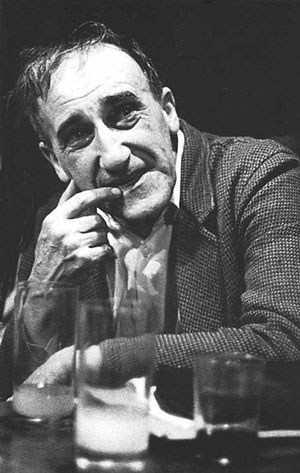
Art theorist, scenographer and producer of the XXth century, Kantor is an unmissable character of the occidental theater. He is the inventor of the “death theater” and is a supporter of a total art. He creates a space in which alive and dead people mingle. In this space, you witness ashamed desires and frightening recollections: love and war and crime and fear and aversion… His artistic attitude found its roots in the dadaism and the surrealism.
His most well-recognized creation was The dead class (Umarla klasa, 1975), which is a story about a fugitive and a permanent.
Workshops:
• Theoretical and artistic analysis of the work of the author
• What is an actor for Kantor? « Bio-object » and « over object »
- Research a physical language to enter the theatrical space through the dissection of the body.
- Look at the object as the incarnation of ideas and substitution from the object to the speaking
• Work on « Banc de l’école » by Elizabeth Czerczuk, created in tribute to Tadeusz Kantor
• Public performance (20 minutes)
STANISLAW IGNACY WITKIEWICZ: THE PURE FORM
« There is no humanity; there are only bipeds as different among them as elephants and giraffes. » Stanislaw Ignacy Witkiewicz (1885-1939)
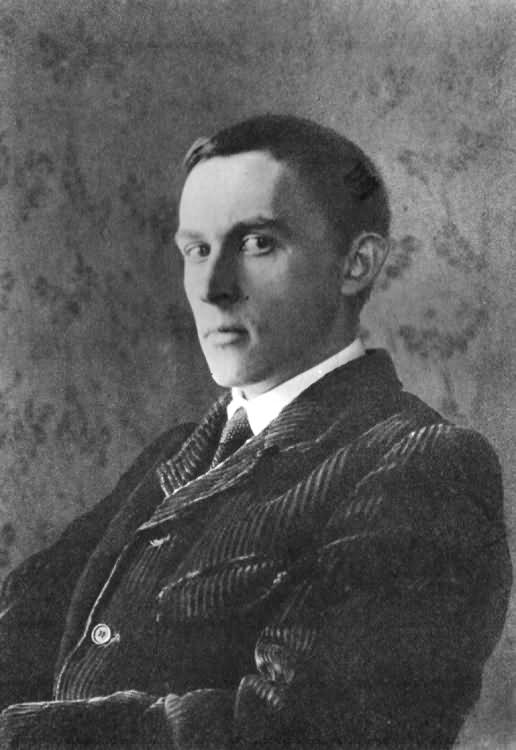
Witkiewicz was not eager to conquer the public: when people criticized him because his plays did not make any sens, he replied that this way of writing a play was the only way for him. His most important contribution to the contemporary theater is the « theory of pure form in theatre ». According to him, the art must be ignorant of all connections with life and must remain an world away from real life. He wants to reinvent the art (literature, painting, philosophy…) and to rebuild it in response to the cultural crisis caused by the modernization.
Workshops :
• Theoretical and artistic analysis of the work of the author
• What is an actor for Witkiewicz?
- Improvisation exercises founded on the theory of pure form.
- Build your own character, with his behaviour and his attitudes.
- Complete your character with the speaking and fill the silence
• Work on « Matka » by Elizabeth Czerczuk, freely inspired of St. I. Witkiewicz
• Public performance (20 minutes)
WITOLD GOMBROWICZ: FROM THE GROTESQUE TO THE DERISION
« People depend very closely on their reflection in the soul of other people, even if this soul is one of an idiot. » Witold Gombrowicz (1904-1969)
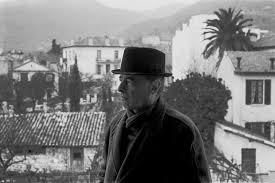
His work is characterized by an absurd tone and a taste for paradox. It has thus long known harsh criticism from his contemporaries who did not like his way of handling lightly existential issues such as philosophy. He always struggled with the difficult history of his homeland and his plays reflect this struggle. His first novel, Ferdydurke, was his most-remarked work in his time: his way of handling themes such as the immaturity or the youth and his criticism of the Polish society gave him the surname « the terrible child » in the modern Polish literature.
Workshops :
• Theoretical and artistic analysis of the work of the author
• What is an actor for Gombrowicz?
- Build a « grotesque » and « ridiculous » character, and develop mime techniques.
- Train your vocal and corporal expression : become aware of your body in the space, try to find your feelings, develop your sense of rhythm, the placement of your voice and your inside beat.
• Work on « Cri d’Yvonne » by Elizabeth Czerczuk, inspired of « Yvonne, princess of Bourgogne » by W. Gombrowicz
• Public performance (20 minutes)
BERTOLD BRECHT : THE EPIC THEATER
Students will be part of « La noce chez les fous » by Elizabeth Czerczuk, a creation freely inspired by the work of Bertold Brecht.
« A theater where we don’t laugh is a theater we have to laugh about.» Bertold Brecht (1898-1956)
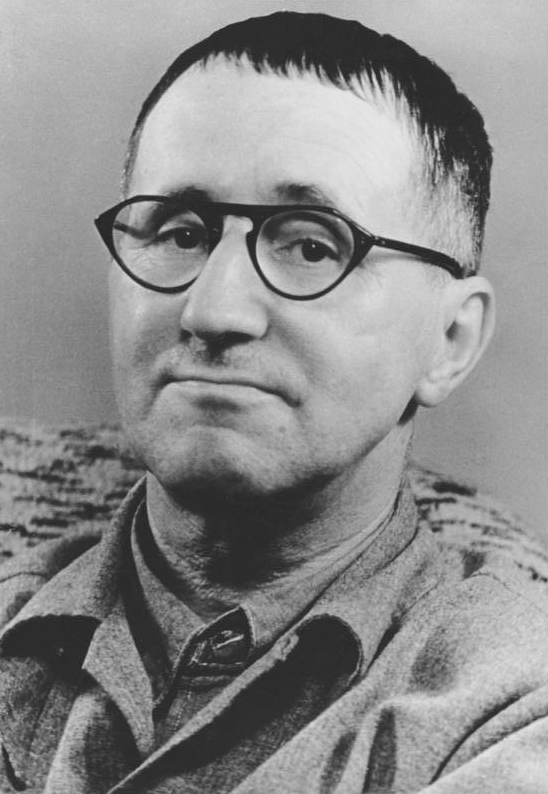
Brecht was traumatized by World War One and by the rise of the Nazis, who interrupted his performances and burnt his books in 1933. These experiences made him want to destroy the theatrical illusion and force the spectator to reflect upon what he is watching and develop a critical mind. Roland Barthes talks about a « Brechtien revolution », because his theater is at odds with the dramatic tradition.
Workshops :
• Theoretical and artistic analysis of the work of the author
• What is an actor for Gombrowicz?
- Work on « La Noce chez les fous » by Elizabeth Czerczuk, inspired by « La Noce chez les petits-bourgeois » of Bertolt Brecht.
- Immersion in the dramaturgy of « La Noce chez les fous » that will be shown in public at the end of the semester, on the stage of Théâtre Elizabeth Czerczuk in Paris.
- Acting under the direction of Elizabeth Czerczuk in the scenic space, with the profesionnal actors.
• Performance of « La Noce chez les fous » the 31st of December, for the New Year’s Eve.

